Sud Radio: water, ally or enemy of digital technology?
David Colon speaking to Vanessa Perez on the programme Le numérique pour tous.
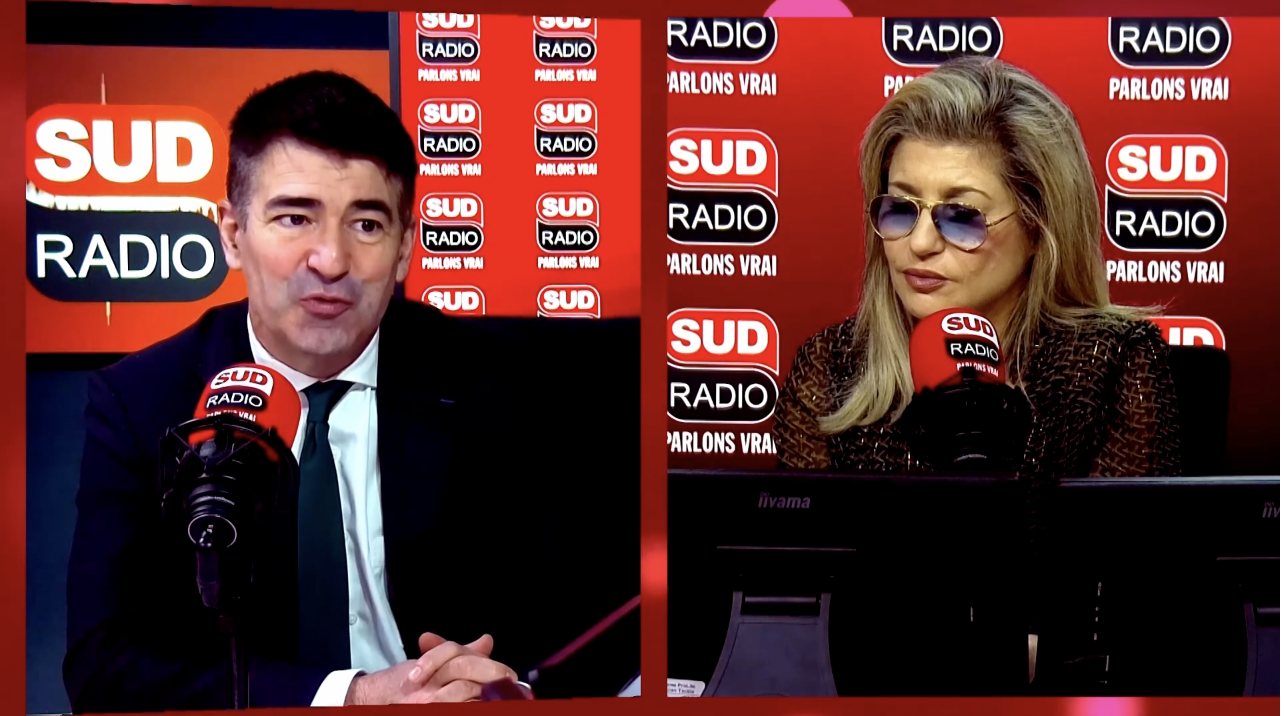
David Colon speaking to Vanessa Perez on the programme Le numérique pour tous.
David Colon was Vanessa Perez's guest on Sud Radio, in the programme Le numérique pour tous, on a subject that is gaining ground: is water the ally or the enemy of digital technology?
The sentence that sums up the exchange: this governance system is being put under strain by the stresses of too much water and not enough water, and we will probably have to invent new tools.
The backdrop is familiar. France built its water management model on a simple assumption: the resource is plentiful, it is regular, and the public service knows how to distribute it. The last three decades have undone that assumption. Summers when water runs short, autumns when it arrives all at once, and in between, trade-offs that no master plan had anticipated.
Digital technology enters this landscape with two faces. On one side it consumes: a data centre has to be cooled, and that cooling is counted in cubic metres, in areas that are already short of water. On the other it measures: without sensors, without remote meter reading, without data processing, nobody knows where the volumes abstracted go or where the network leaks.
Both sides count, and setting them against each other leads nowhere. The real question is what comes in return: a digital use that abstracts water must be able to demonstrate what it gives back, in efficiency, in savings made elsewhere, in knowledge of the resource.
Agriculture is the largest source of abstraction, and it is also where measurement changes everything. A farmer who steers irrigation on soil data saves water without losing yield. But he will only obtain transition funding if he can prove the saving, year after year, with records that stand up.
Industry follows the same logic. A site that reduces its abstraction does so first for its own business continuity, then for its obligations, and finally for its non-financial report. Here again, everything rests on the quality of the record.
That leaves the economic models, which are the real sticking point. The price of water in France does not fund network renewal at the pace required. The investments to be made are massive, public budgets are constrained, and private funding will not come without a demonstration of efficiency.
That is precisely what Verdeo is about: giving local authorities, régies (directly operated public utilities) and operators the means to prove what they do, so that funding follows. A documented saving of cubic metres, attached to its supporting evidence and ready to show a funder, is worth more than an annual report pieced together from memory.
Water management and its economic models are at the heart of the solutions for local areas. The subject is fascinating in view of what lies ahead: agriculture, industry, data servers and the quality of the resource.
Always a pleasure to make these issues accessible.
Listen to the programmeSud Radio, Le numérique pour tous. Interview by Vanessa Perez.